Do not build a shadow organization of AI agents.
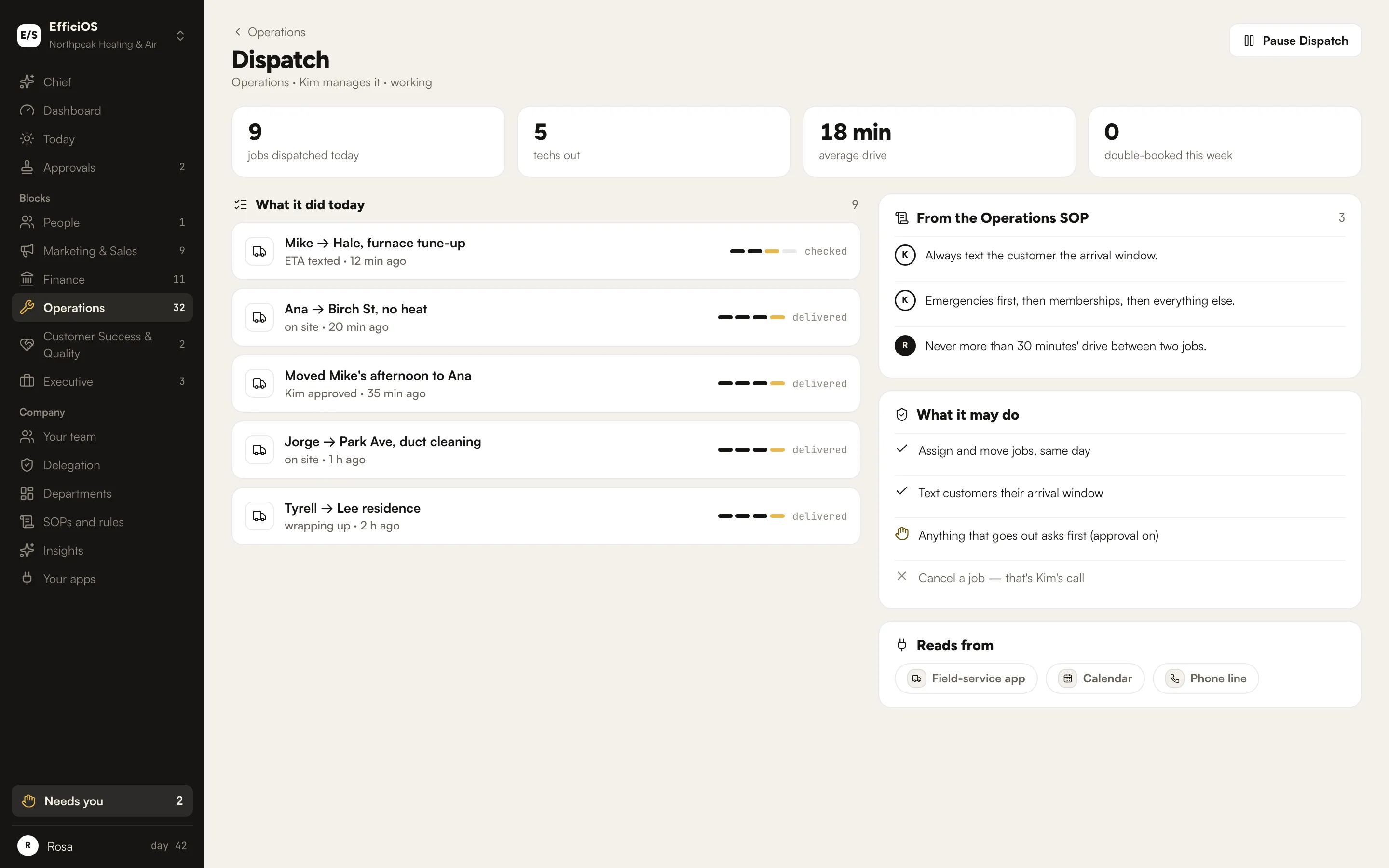
Your work and your team's work, organized on one org chart. Your Chief runs it, and you decide.
Every agent starts with real work, follows an approved process, reports to a person and knows where its authority ends.
- DomainStart with a real business function.
- SOPDefine how the work should run.
- Agent roleGive AI bounded responsibility.
- Human ownerKeep one person accountable.
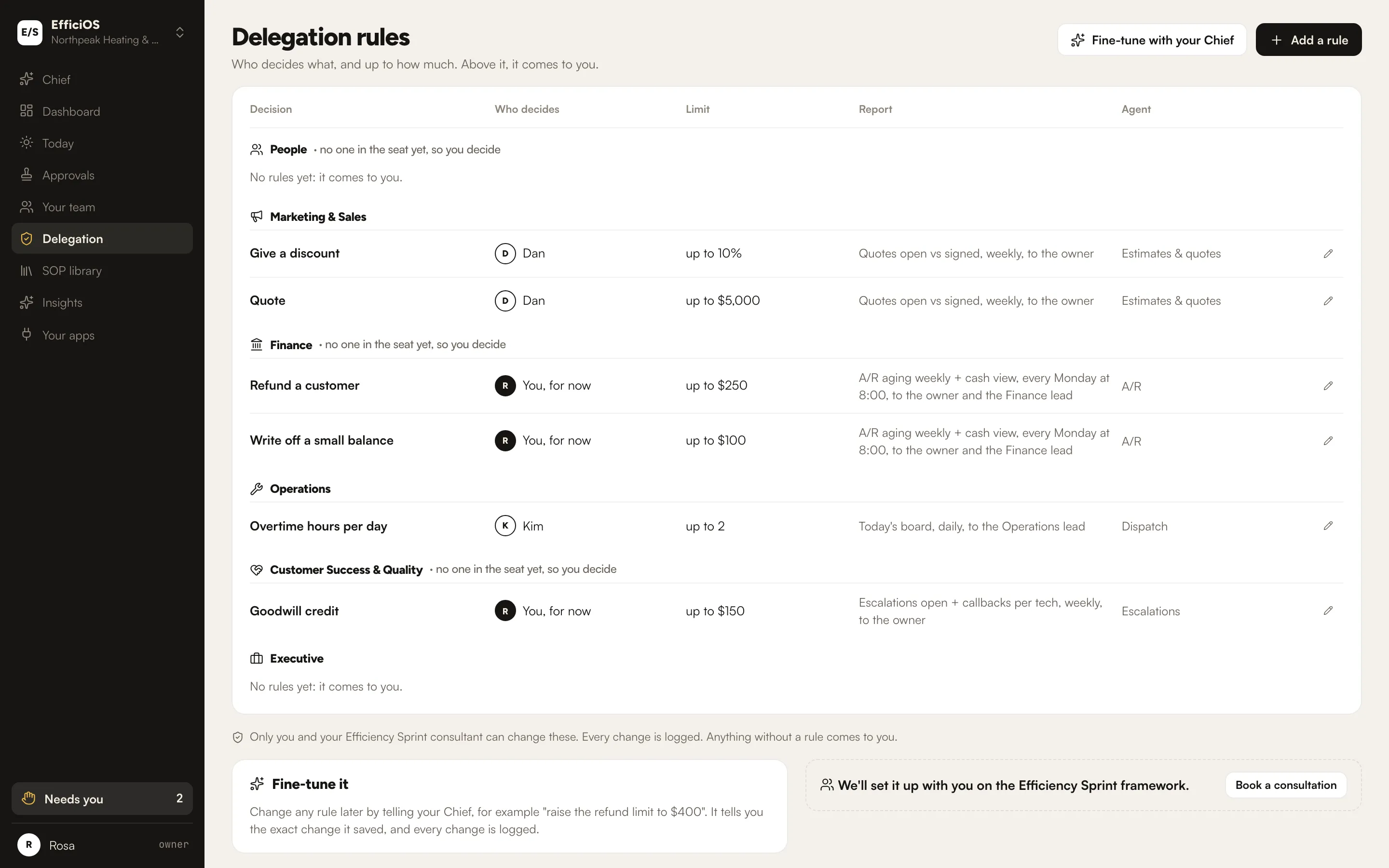
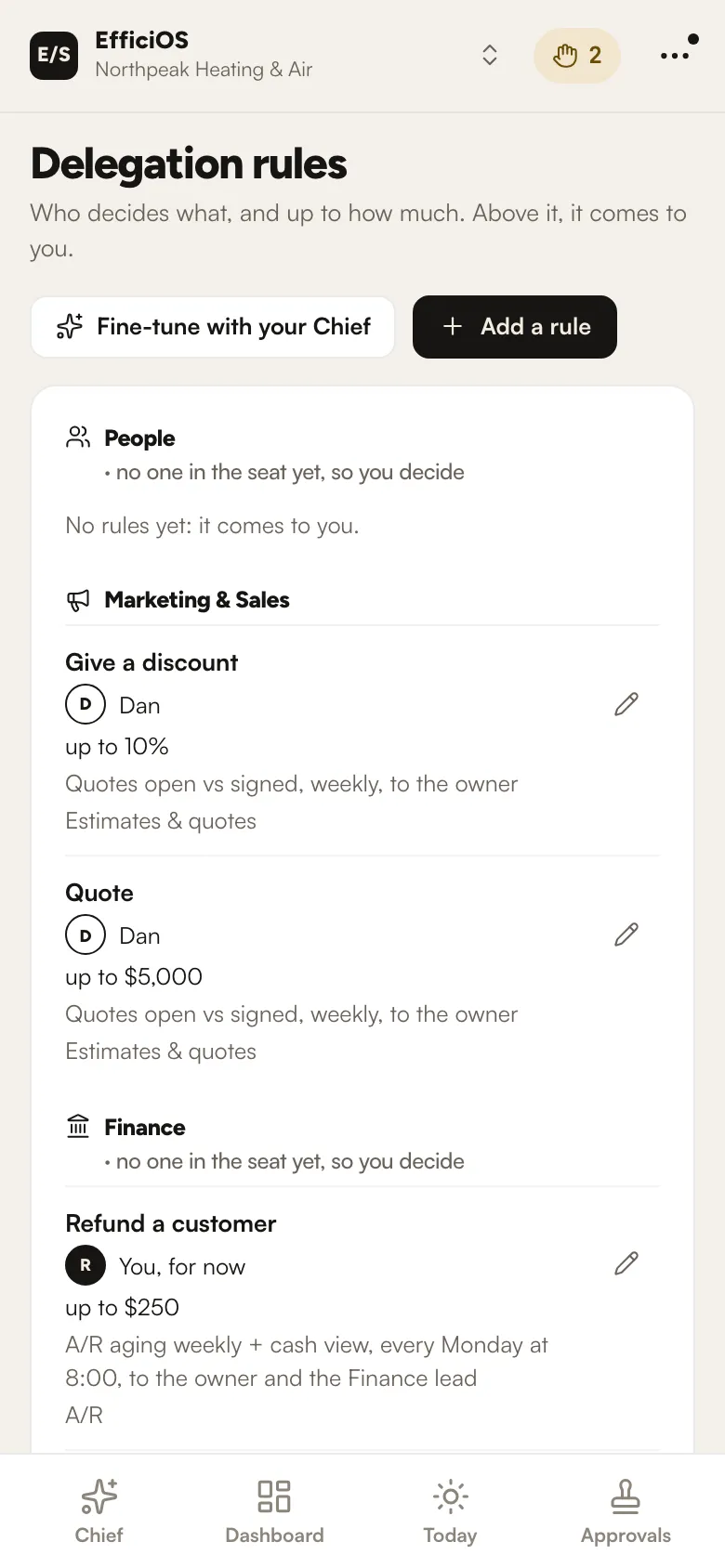
- DelegationDecide what it does alone and what goes to a person.
- Managed outcomeSee the work and improve it.
Autonomy without ownership is not an operating model.
A useful demo can still create a management problem. If an agent works apart from the process and the people around it, the company inherits another system nobody truly owns.
Every agent has a job, a manager, and a line it cannot cross.
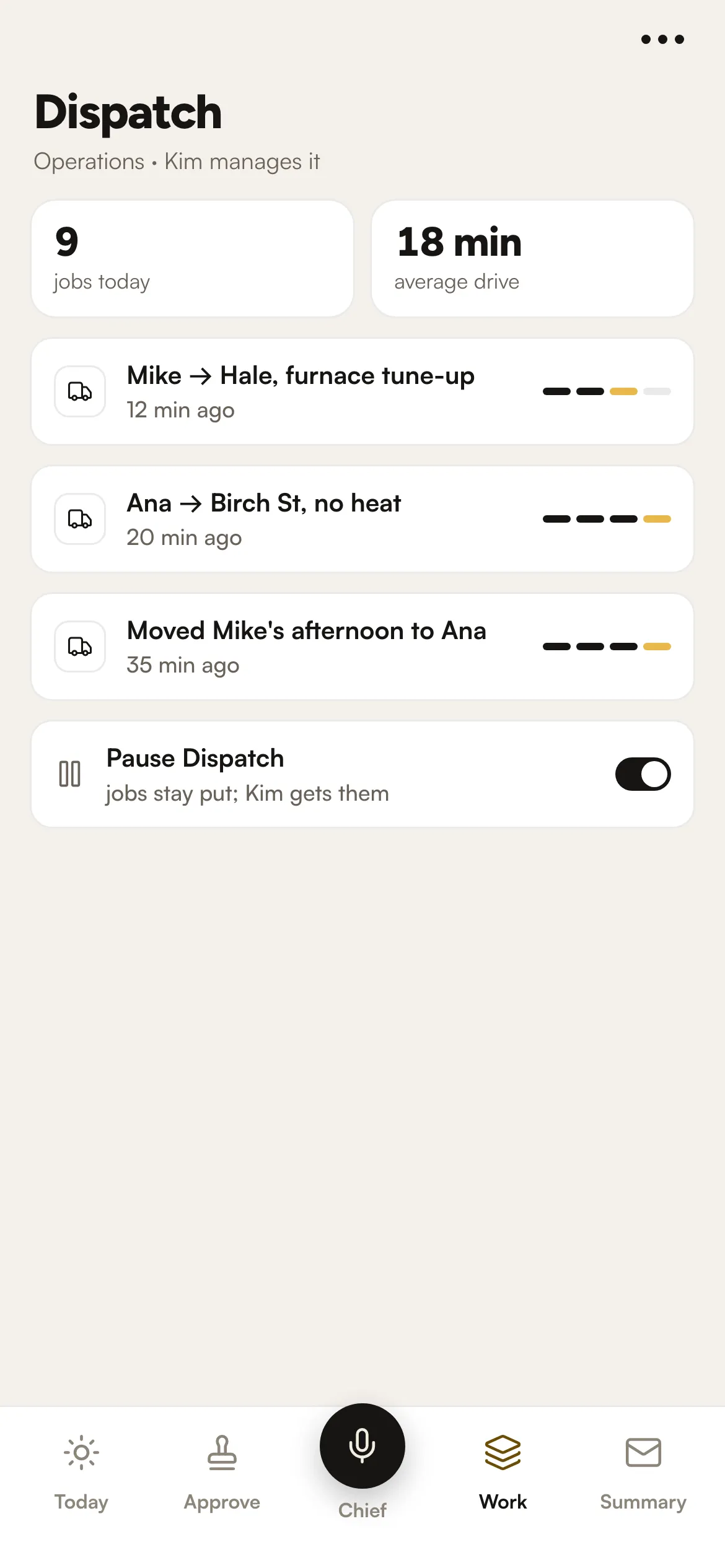
In Delegation, you set what each agent does on its own and what goes to a person. Agents are designed to read and write in your tools from the first minute, and we recommend turning on write once Delegation is set. When something does need a person, it waits in Approvals.

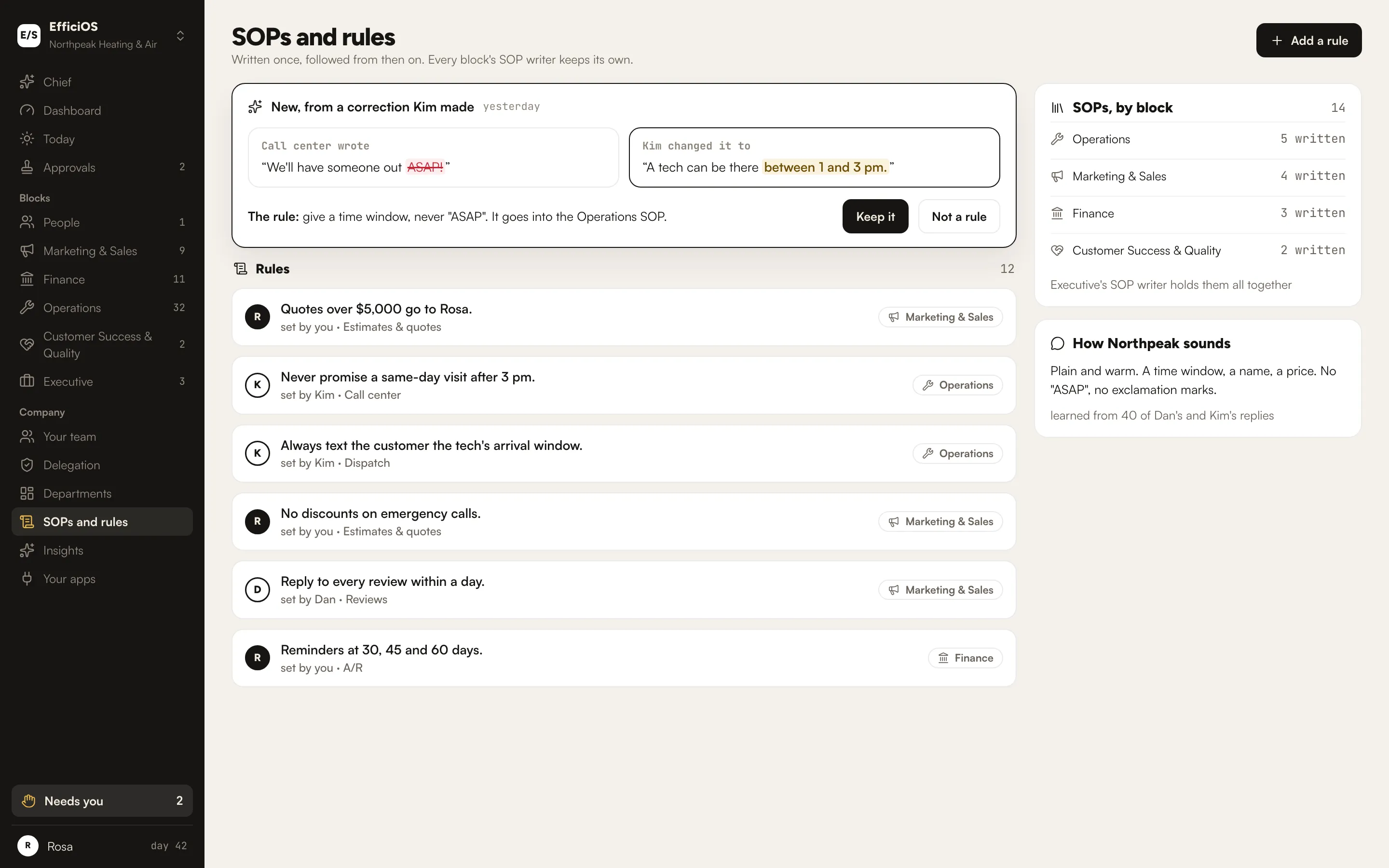
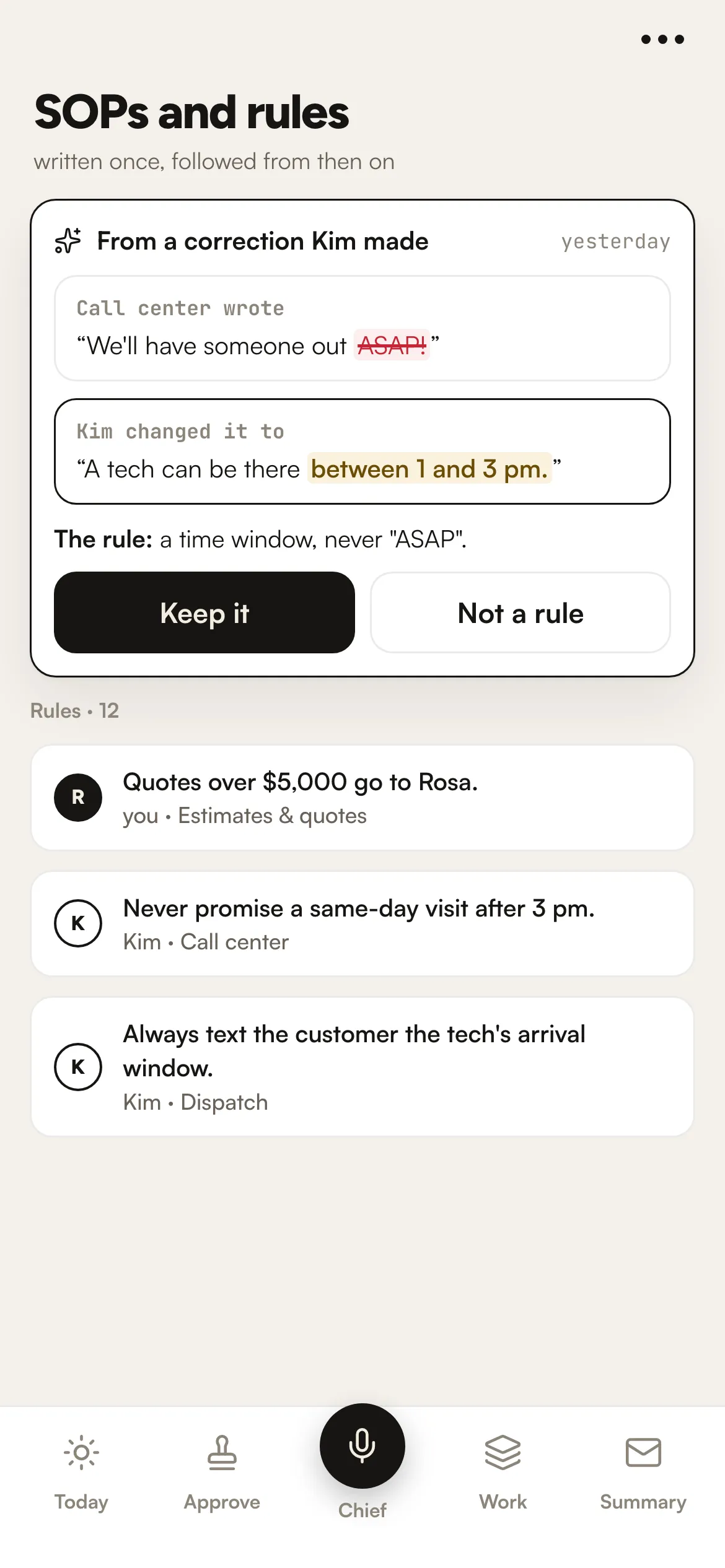
The agent belongs to the organization, not beside it.
People and AI roles share reporting lines and standards on one org chart, so accountability is visible before work is delegated. Technology does not decide how the company should operate. The operating model defines what technology is allowed to do.
Find out which work your operation can safely support.
SCOPE™ by Efficiency Sprint shows where the work is ready, and what must be repaired before AI takes on operational work.